2025 — Polycultures
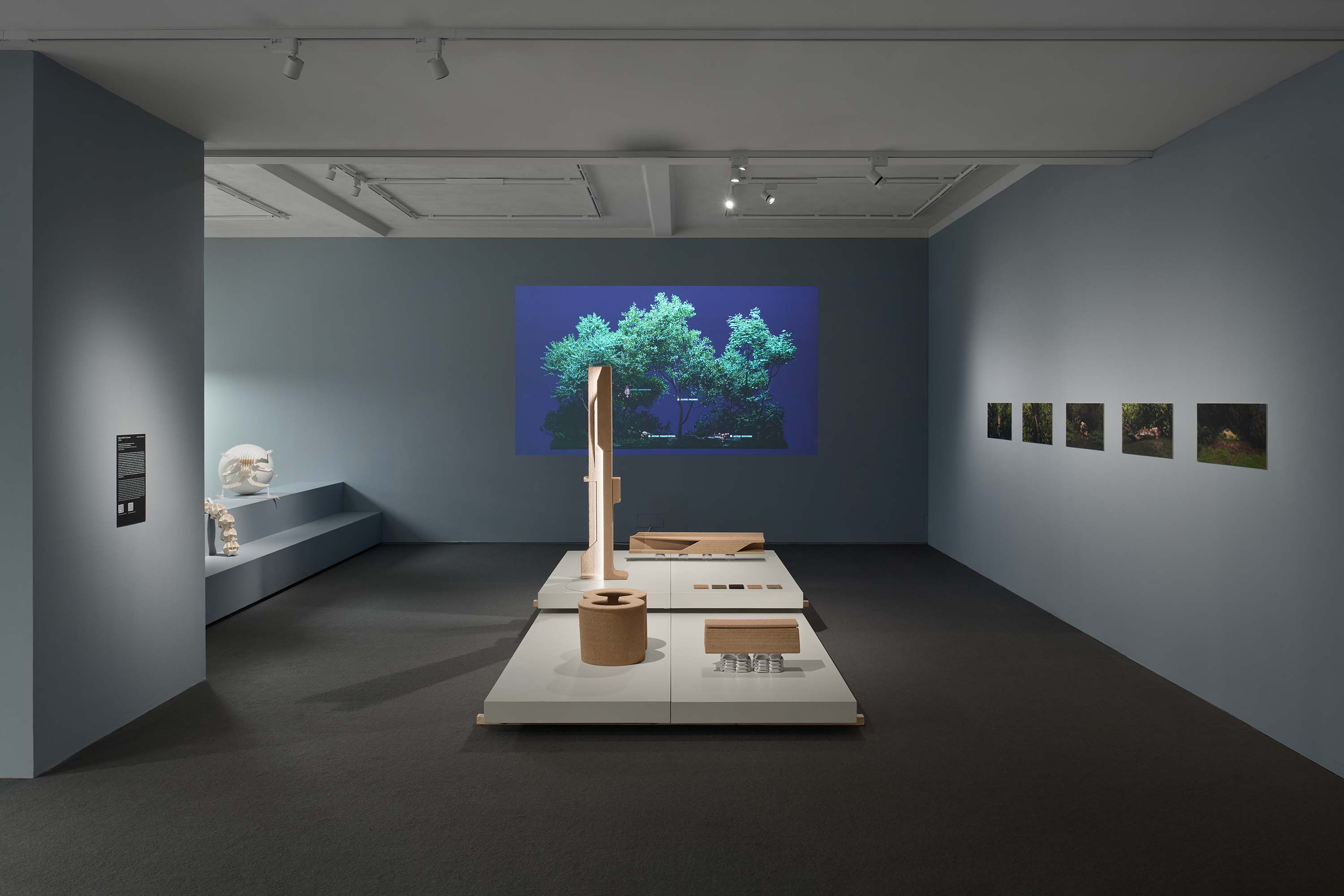
Polycultures is an investigation into the potential future of agricultural practices when viewed through the lens of more-than-human design. It speculates on future agricultural systems by combining agro-ecological practices such as agroforestry and permaculture with robotics and closed-loop nutrient cycles. Developed with the Futures and Innovation team at Fraunhofer ISI, the project was initiated by the Grassi Museum für Angewandte Kunst.
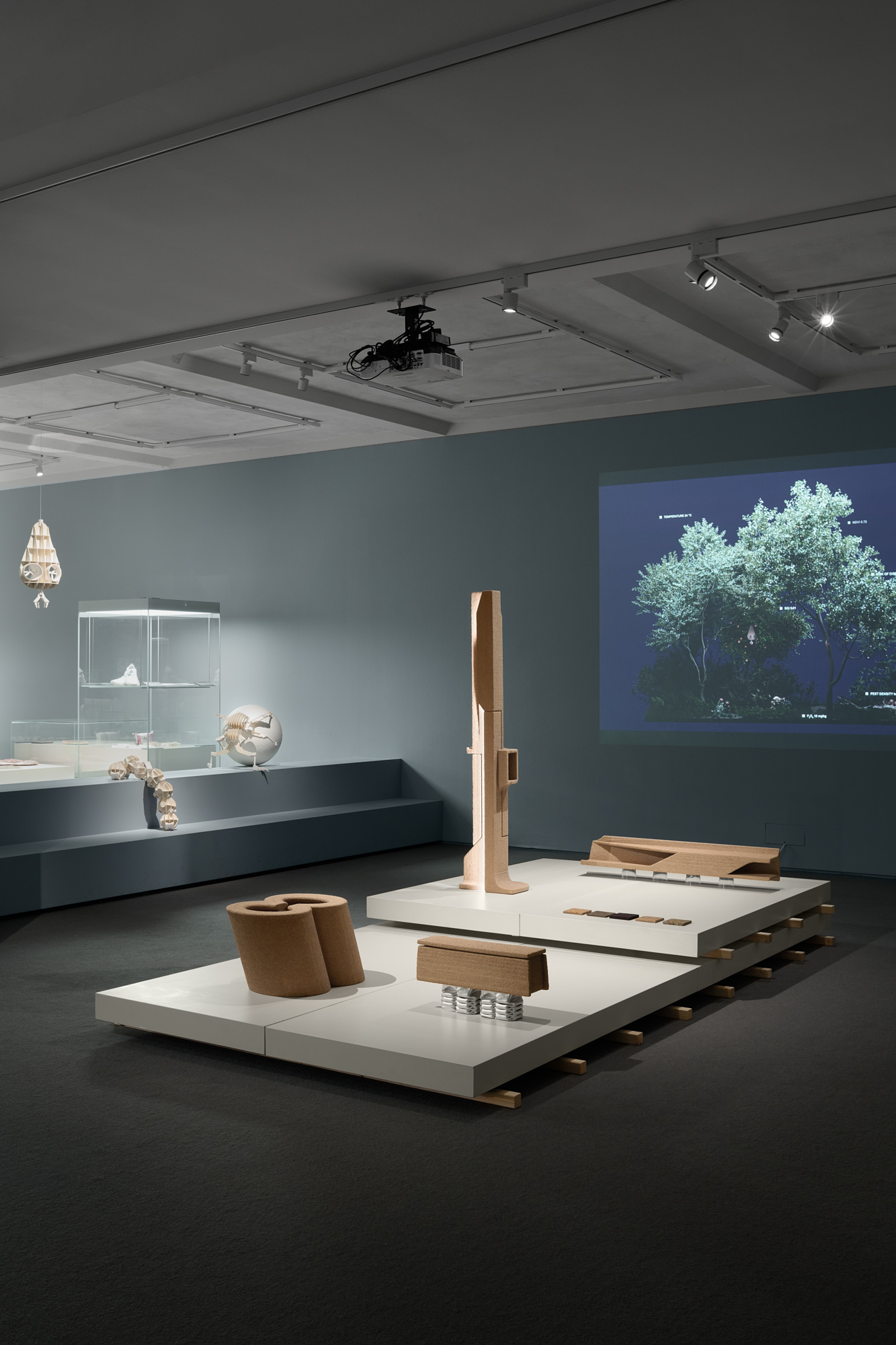
The work proposes a post-anthropocentric reimagining of cultivation: a self-governing forest garden that produces food for human communities according to principles of ecological intelligence, such as forest succession and permaculture diversity, ensuring the long-term stability of the system. An intelligent technical layer augments the forest garden, with devices that enable minimal interaction with the ecosystem. These robotic agents are recontextualised from existing research in biomimetics and reimagined as agricultural actors. Rather than supporting conventional farming, they are deployed to enable alternative and sustainable forms of food cultivation.
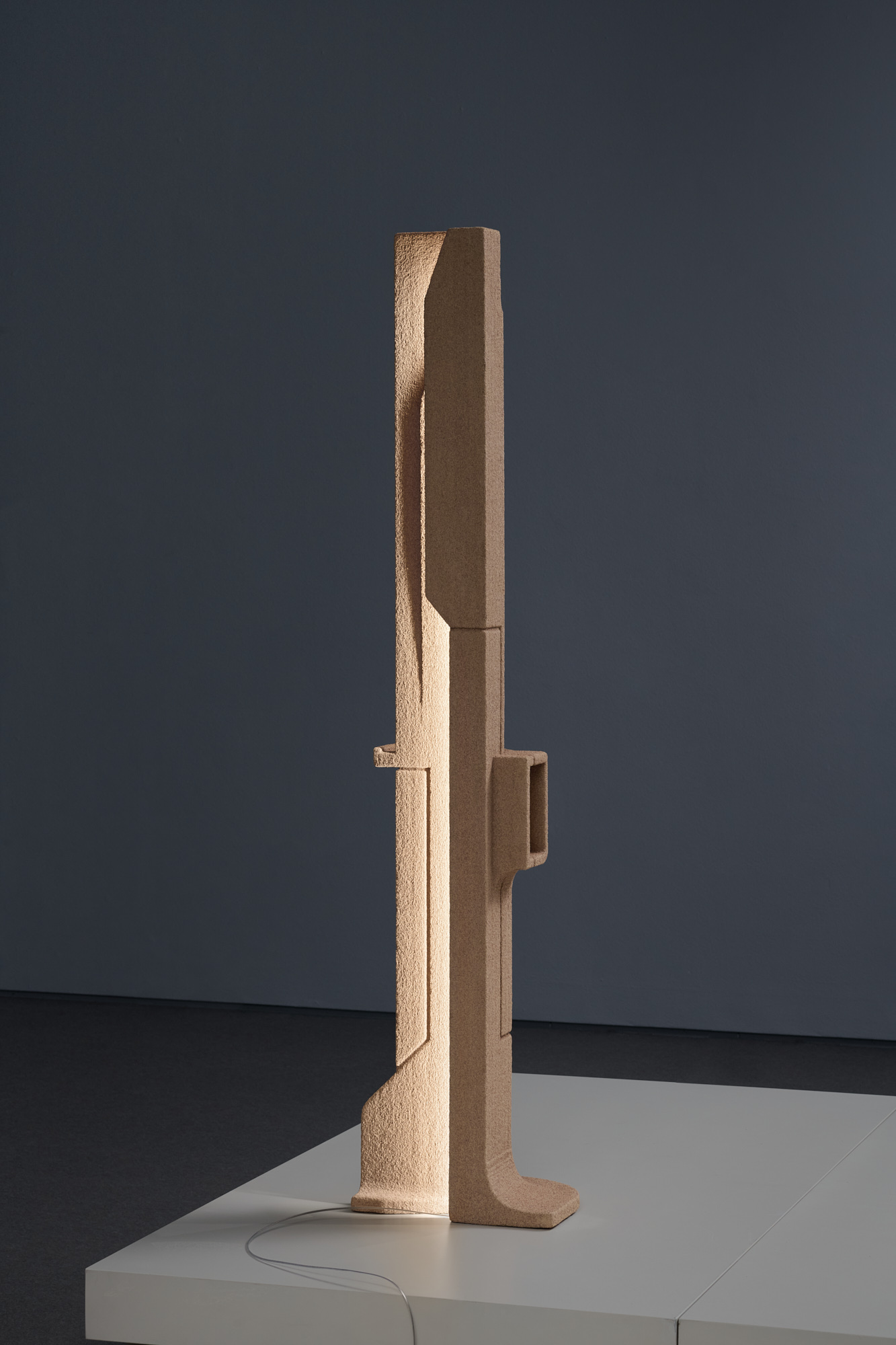
Alongside the system itself, a collection of mundane objects is displayed. These artefacts offer glimpses into the material culture of the society behind these farming methods, illustrating how daily life, diet, and material practices could evolve in symbiosis with ecological processes, robotics, and circular consumer behaviour.
One of the objects reimagines a Bokashi container, which uses fermentation to compost food waste. Effective micro-organisms convert organic waste from the processing of plant products into nutrient-rich fertiliser. The second object represents a urine-diverting toilet that separates urine and faeces. This allows essential nutrients to be recovered as fertiliser, which would otherwise be lost during food cultivation. The third and fourth objects resemble everyday items, such as furniture. Made from biocomposite materials derived from plant by-products, they can be returned to biological cycles and become a source of new life as humus.
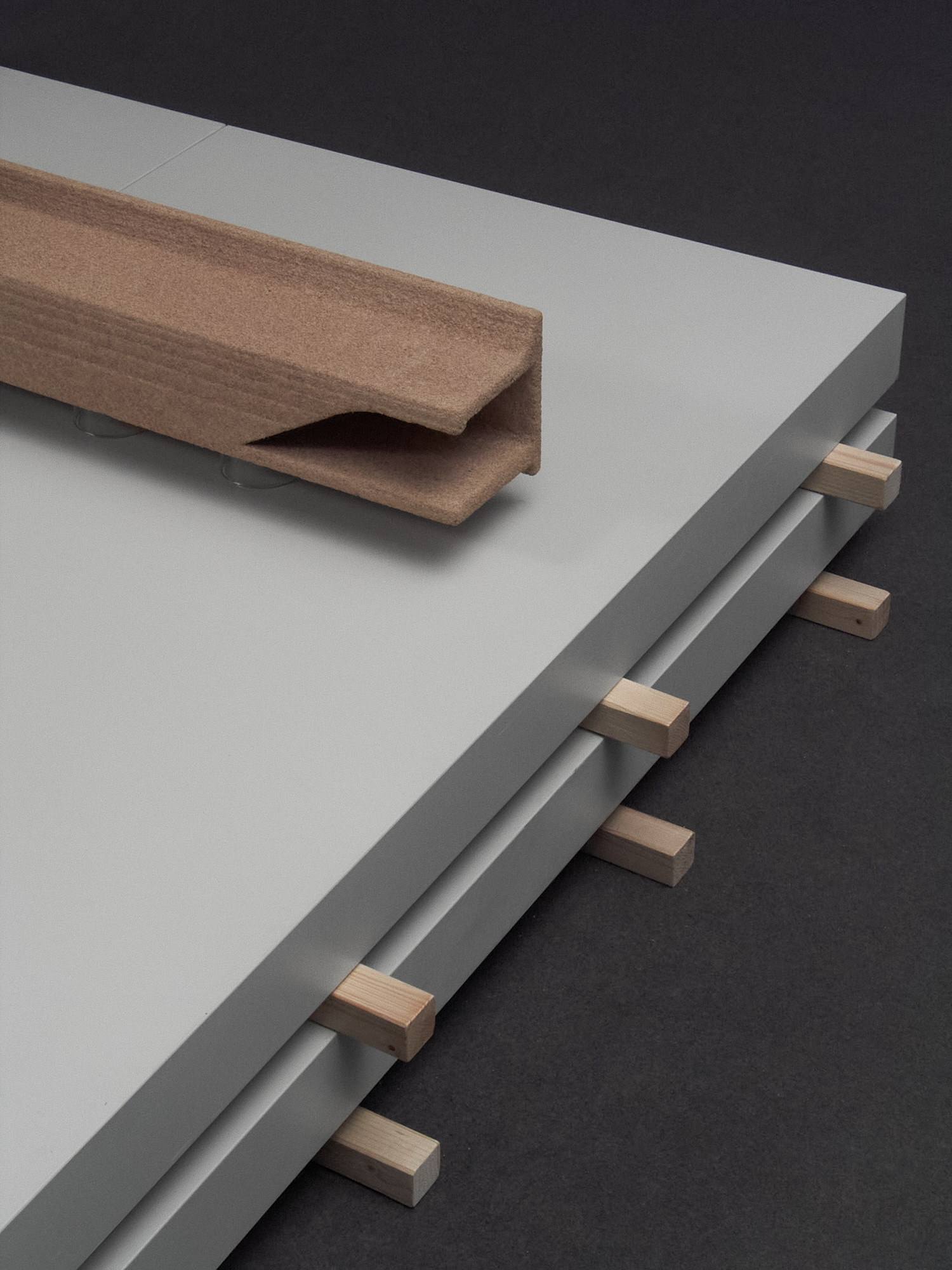
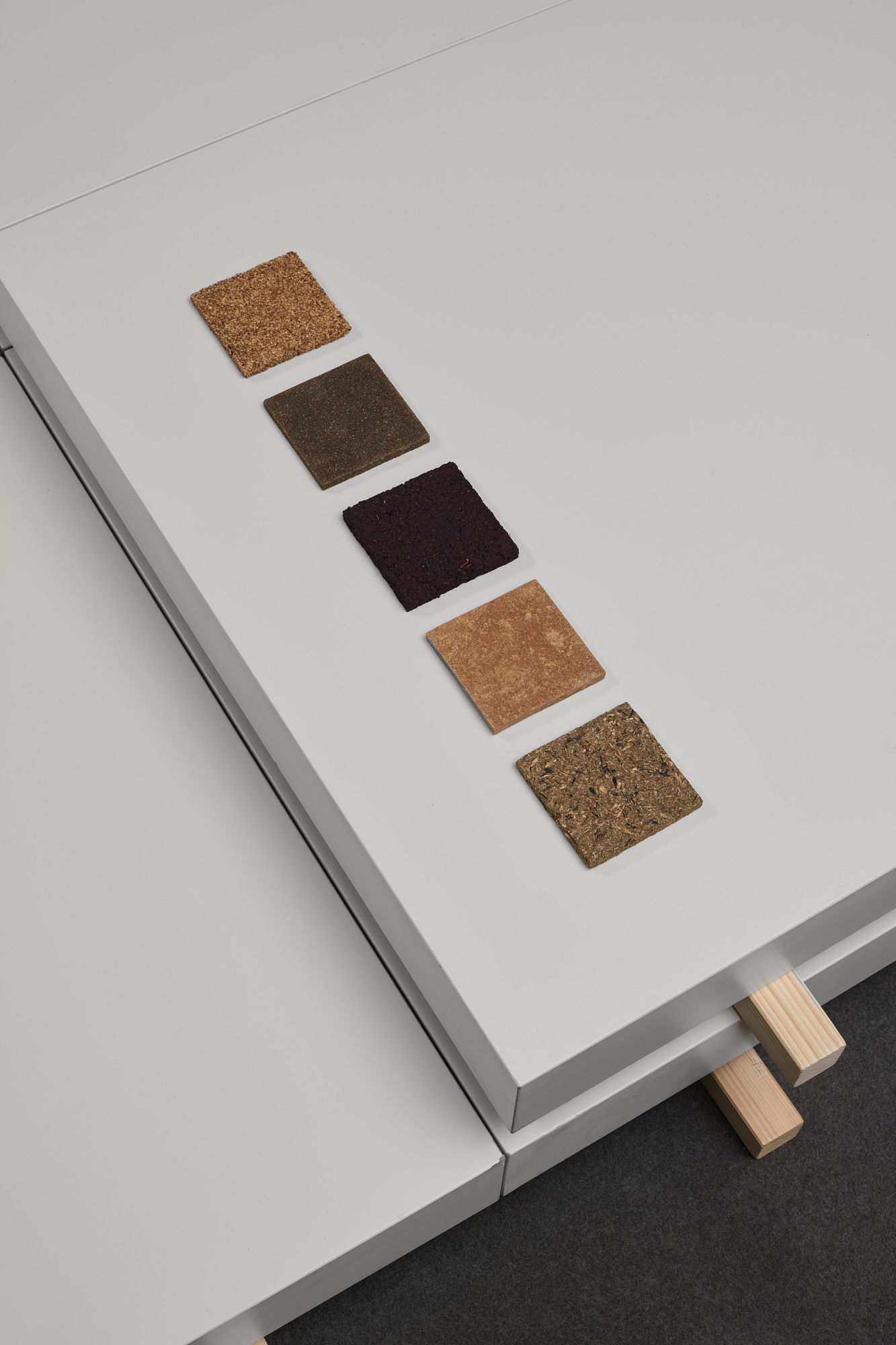
The artifacts are manufactured from mineral-bound wood chips using 3D printing technology to represent the materials that were developed from plant by-products in small-scale tests.
The project is grounded in a body of interviews and conversations with practitioners in farming and food processing. These testimonies provided both knowledge and critique, shaping the prototypes and situating them within current debates around land use, food systems, and ecological resilience. Polycultures therefore operated not only as a scenario for a future farm, but also as an educational endeavour that organised, archived, and shared research across disciplines.
The project was presented in three consecutive, alternating phases — research, prototype, and proposal — as part of the exhibition FUTURES Material and Design of Tomorrow.
The work proposes a post-anthropocentric reimagining of cultivation: a self-governing forest garden that produces food for human communities according to principles of ecological intelligence, such as forest succession and permaculture diversity, ensuring the long-term stability of the system. An intelligent technical layer augments the forest garden, with devices that enable minimal interaction with the ecosystem. These robotic agents are recontextualised from existing research in biomimetics and reimagined as agricultural actors. Rather than supporting conventional farming, they are deployed to enable alternative and sustainable forms of food cultivation.
Alongside the system itself, a collection of mundane objects is displayed. These artefacts offer glimpses into the material culture of the society behind these farming methods, illustrating how daily life, diet, and material practices could evolve in symbiosis with ecological processes, robotics, and circular consumer behaviour.
One of the objects reimagines a Bokashi container, which uses fermentation to compost food waste. Effective micro-organisms convert organic waste from the processing of plant products into nutrient-rich fertiliser. The second object represents a urine-diverting toilet that separates urine and faeces. This allows essential nutrients to be recovered as fertiliser, which would otherwise be lost during food cultivation. The third and fourth objects resemble everyday items, such as furniture. Made from biocomposite materials derived from plant by-products, they can be returned to biological cycles and become a source of new life as humus.
The artifacts are manufactured from mineral-bound wood chips using 3D printing technology to represent the materials that were developed from plant by-products in small-scale tests.
The project is grounded in a body of interviews and conversations with practitioners in farming and food processing. These testimonies provided both knowledge and critique, shaping the prototypes and situating them within current debates around land use, food systems, and ecological resilience. Polycultures therefore operated not only as a scenario for a future farm, but also as an educational endeavour that organised, archived, and shared research across disciplines.
The project was presented in three consecutive, alternating phases — research, prototype, and proposal — as part of the exhibition FUTURES Material and Design of Tomorrow.
Concept And DesignJohanna Seelemann
Production
Studio Johanna Seelemann
Initiated BY
Curated by
LED BY
Fraunhofer Institute for Systems and Innovation Research ISI, Futures and Innovation team and created as part of the project Speculative Futures. Spekulatives Design als Impulsgeber für eine biobasierte Wertschöpfung
Fraunhofer ISI Team
Dr. Juliane Welz
Supported by
Funded by
Assistance
Marc Goldbach
Photography
Videography
Special Thanks
Bayrische Landesanstalt für Landwirtschaft
Johanna Seelemann
Production
Studio Johanna Seelemann
Econitwood
Initiated BY
Grassi Museum für Angewandte Kunst
Curated by
Silvia Gaetti
LED BY
Fraunhofer Institute for Systems and Innovation Research ISI, Futures and Innovation team and created as part of the project Speculative Futures. Spekulatives Design als Impulsgeber für eine biobasierte Wertschöpfung
Fraunhofer ISI Team
Dr. Juliane Welz
Ina Baier
Valentin Knitsch
Dr. Anne Sonnenmoser
Anna Rupp
Julia Klenovsky
Supported by
Grassi Museum für Angewandte Kunst
Funded by
Fraunhofer-Netzwerk »Wissenschaft, Kunst und Design«
Assistance
Marc Goldbach
Lion Sanguinette
Laura Laipple
Photography
Robert Damisch
Videography
Studio Johanna Seelemann
Special Thanks
Bayrische Landesanstalt für Landwirtschaft
Forschungsprojekt NaPA, Sebastian Funk
Zukunftsspeisen, Urte Grauwinkel
Gemüsekooperative Rote Beete, Tom Leonhardt
Obsthof Schwitzky, Elisabeth and Uwe Schwitzky
Fruchtsaftverarbeitung Sohra, Prof. Dr. Wolfram Scharff
Luftmühle Rodersdorf, Johannes Löffler
Hülsenreich, Emilie Wegner